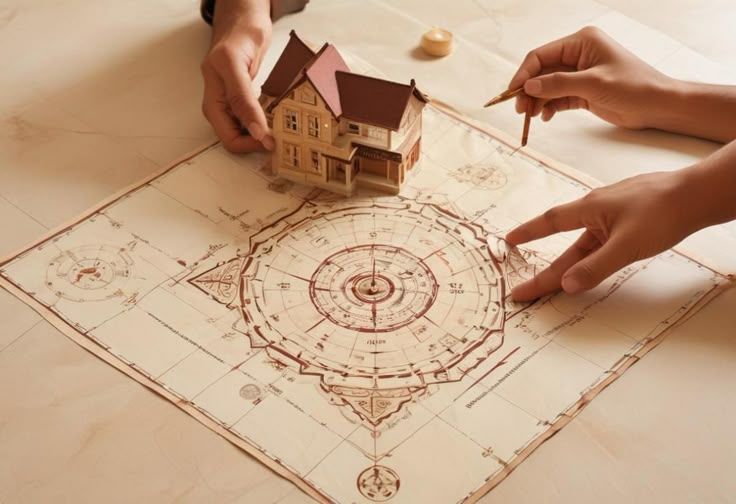
Vaasthu Tips for a More Positive and Peaceful Home
Your home is more than just a place where you live. It is where you begin your mornings, spend time with your family, relax after a long day, and create some of your most meaningful memories.
Have you ever noticed how certain spaces immediately make you feel calm, comfortable, and welcomed, while others feel cluttered, heavy, or uncomfortable?
Creating a positive and peaceful home environment does not always require expensive interiors or major renovations. Simple improvements in the way you organize, maintain, and use your space can make a meaningful difference.
From the main entrance and bedroom to natural light, ventilation, and kitchen placement, several aspects of a home can be considered from both practical and traditional Vaasthu perspectives.
What Is Vaasthu Shastra?
Vaasthu Shastra is a traditional Indian architectural system that explores the relationship between built spaces, directions, elements, layout, and the way people interact with their surroundings.
Vaasthu is often considered when planning a new house, purchasing a property, renovating an existing home, or designing a workspace.
However, Vaasthu should not be viewed simply as a collection of rules or random tips. Every property is different, and factors such as the plot, structure, location, lifestyle, budget, safety, and functionality should also be taken into consideration.
The goal is to understand how traditional Vaasthu principles can be thoughtfully applied to a particular space.
1. Keep the Main Entrance Clean and Welcoming
The main entrance of your home is the first space you and your guests experience.
Keeping the entrance clean, well-lit, organized, and free from unnecessary objects can make the home feel more welcoming.
Avoid allowing footwear, cardboard boxes, unused furniture, damaged objects, or other clutter to accumulate around the entrance. A clear and pleasant entrance can create a better first impression and make everyday movement easier.
From a Vaasthu perspective, the entrance is also considered an important part of the home’s overall energy and layout. Its direction, placement, surroundings, and design may be evaluated when assessing a property.
2. Create a Clutter-Free Home
A clutter-free home can feel more spacious, comfortable, and peaceful.
Old boxes, broken appliances, unused furniture, damaged objects, and belongings that have not been used for years can occupy valuable space without providing much practical value.
Take time to review the things you keep in your home. Ask yourself:
- Do I actually use this?
- Does it serve a useful purpose?
- Does it add comfort or beauty to the space?
- Is it in good condition?
- Does keeping it make the room feel more crowded?
Removing unnecessary items can make it easier to maintain an organized and pleasant living environment.
3. Give Your Bedroom Special Attention
The bedroom is where you rest, sleep, and recharge, so it deserves particular attention when creating a peaceful home.
Keep the room clean and organized and avoid unnecessary electronic distractions, excessive clutter, and objects that interfere with relaxation.
From a traditional bedroom Vaasthu perspective, factors such as the placement of the bed, doors, windows, mirrors, and other elements may be considered.
At the same time, practical requirements should always come first. Your bedroom should have adequate ventilation, comfortable temperature, suitable lighting, and a layout that supports restful sleep.
4. Make the Most of Natural Light and Fresh Air
Natural light and fresh air can transform the atmosphere of a home.
Whenever possible, allow sunlight and fresh air to enter your living spaces. Keep windows reasonably unobstructed and ensure that rooms have adequate ventilation.
A bright and well-ventilated home can feel fresher, more open, and more comfortable throughout the day.
Traditional Vaasthu also gives importance to directions, openings, and the movement of light and air through a building. These principles can be considered alongside modern architectural and environmental requirements.
5. Choose Home Décor That Adds Value
The objects you keep around you can influence the character and atmosphere of your home.
Photographs, artwork, plants, furniture, books, and personal belongings can make a house feel warm and personal. However, continuously keeping broken, damaged, unwanted, or unused objects can make the environment unnecessarily crowded.
Choose décor and furnishings that genuinely add comfort, beauty, usefulness, or personal meaning to your surroundings.
A positive home does not need to be filled with expensive objects. Thoughtful choices and good organization can often make a greater difference.
6. Keep the Kitchen Clean and Organized
The kitchen is one of the most active and important areas of a home. Keeping it clean, organized, and functional can make everyday life easier and more enjoyable.
In traditional Vaasthu Shastra, the kitchen is associated with the fire element, and its placement and arrangement are given importance.
When considering kitchen Vaasthu, factors such as direction, cooking area, storage, ventilation, and placement of appliances may be discussed.
However, Vaasthu recommendations should always be balanced with practical considerations such as fire safety, ventilation, hygiene, accessibility, and modern kitchen requirements.
A beautiful kitchen is useful only when it is also safe and functional.
7. Consider Vaasthu During the Planning Stage
Vaasthu does not have to be considered only after a house has already been constructed.
If you are planning to build a new home, purchase a property, renovate an existing house, or design a workspace, considering Vaasthu during the planning stage can provide greater clarity when making layout and design decisions.
Early planning can be particularly useful because changes to orientation, room placement, entrances, openings, and other structural elements may be easier to evaluate before construction or renovation begins.
Vaasthu Is More Than Just Directions
One of the common misconceptions about Vaasthu is that it is simply about checking directions and following a list of do’s and don’ts.
Traditional Vaasthu is broader than that. It considers the relationship between space, directions, elements, layout, structure, and human activity.
At the same time, not every recommendation found online will be appropriate for every property.
A solution that may be suitable for one house may not necessarily be suitable for another.
Every Property Is Different
There is no single Vaasthu solution that can automatically be applied to every home.
The plot size and shape, location, surrounding structures, existing construction, floor plan, family requirements, lifestyle, budget, and practical limitations can all influence the recommendations.
This is why a thoughtful assessment of the individual property is more useful than blindly following generic Vaasthu tips.
Instead of asking only, “What is the correct direction?”, it can be more helpful to understand how the principles apply to your particular space.
Create a Home That Feels Right for You
A good home is not defined only by its appearance.
It should be a place where you feel comfortable, safe, relaxed, and connected with the people and activities that matter to you.
Vaasthu can be considered as one part of creating such a space—together with good design, functionality, natural light, ventilation, organization, safety, and your family’s individual needs.
So, rather than blindly following every Vaasthu tip you come across, take the time to understand the underlying principles and seek guidance based on your specific property.
Because a good home isn’t just about how it looks.
It is about how it feels to live in it.
Looking for Vaasthu Guidance for Your Home?
Whether you are planning a new home, buying a property, renovating your existing space, or simply trying to understand how Vaasthu can apply to your surroundings, professional guidance can help you approach the process with greater clarity and confidence.
Vaasthu Kshetraa Helping you understand your space better and create a home that feels right for you.
Note: Vaasthu is a traditional architectural and spatial system. Individual interpretations and recommendations can vary. Vaasthu guidance should be considered alongside professional architectural, structural, safety, and practical requirements.
Leave a Reply